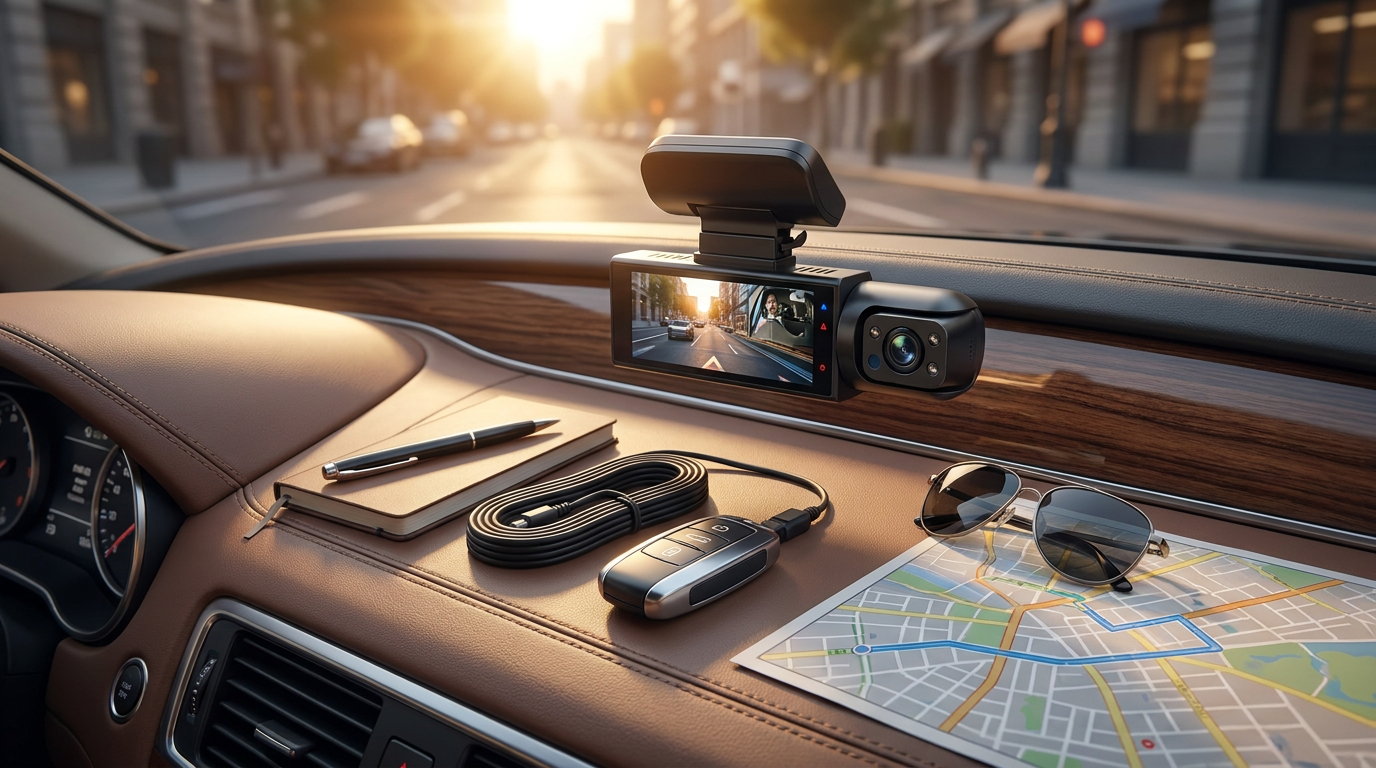
Choosing a Dual Camera Dash Cam for Fleet and Personal Use
 Sam VasquezBuying Guide Lead
July 22, 2026. This guide explores the technical requirements and practical applications of multi-channel recording systems for modern vehicles. It is intended for daily commuters, rideshare professionals, and fleet managers who require verifiable visual evidence from multiple angles.
The Complexity of Multi-Angle Vehicle Recording
Operating a vehicle in high-traffic environments introduces risks that a single forward-facing lens cannot fully capture. While a standard dash cam records what happens in front of the hood, it leaves the driver vulnerable to rear-end collisions and side-swipe disputes. For those in the gig economy, the interior of the cabin is just as critical as the road ahead. According to user discussions on Reddit regarding the best dash cam for rideshare drivers, the primary concern is often the lack of interior visibility during night shifts. Without a secondary lens, a driver has no objective record of passenger behavior or disputed interactions inside the car.
Furthermore, the physical logistics of managing two video feeds can be daunting. Many drivers worry about the complexity of a front and rear dash cam installation because of the cabling required to reach the back window. This leads many to settle for inferior single-channel units, which effectively ignores 50% of the potential impact zones. When you consider that rear-end collisions are among the most common types of accidents, relying on a front-only setup is a significant gamble. If you're on a budget, you might be tempted to buy two separate cheap cameras, but syncing the footage for an insurance claim is a nightmare I wouldn't wish on anyone. Between the two options of a DIY dual-unit or a dedicated dual camera dash cam, I'd go with the integrated system every time for the sake of timestamp synchronization.
Technical Standards for Dual Channel Systems
Photo by Kyle Loftus on Pexels
When evaluating a dual camera dash cam, resolution and low-light performance are the two metrics that actually matter. A 4k dual dash cam setup provides the pixel density needed to read license plates at a distance, which is often the only way to identify a vehicle in a hit-and-run scenario. However, resolution alone isn't enough if the sensor fails when the sun goes down. High-quality systems now utilize specialized sensors to ensure a dash cam with night vision and parking mode can still capture usable details in unlit parking lots.
For Uber and Lyft drivers, the configuration shifts slightly. Instead of a rear-window camera, these users typically look for a dash cam with an interior camera built into the main housing. This setup provides a wide-angle view of the cabin, often using infrared LEDs to see in total darkness. If you are more concerned about stealth and aesthetics than interior recording, you might prefer a hidden dual dash cam no wires look, which uses discreet mounting and tucked cabling to stay out of your line of sight. Here is what I’d actually buy: a 4K front-facing unit paired with a 1080p rear or interior lens. You don't necessarily need 4K for the cabin or the rear view, but you absolutely need it for the road ahead to catch those small details like registration stickers or street signs. Skip this if you only drive during daylight hours in a low-traffic rural area where a basic single-lens unit might suffice, but for everyone else, the dual-channel approach is the baseline for modern protection.
Decision Framework for Selecting Your Unit
Photo by Gaspar Zaldo on Pexels
Choosing the right hardware depends on your specific vehicle type and your primary goal—whether that is monitoring your car while it is parked or protecting your professional reputation. If you've been browsing best budget dual dash cam reddit picks, you likely know that the community favors reliability over flashy features. A camera that overheats and stops recording in the middle of a trip is worse than no camera at all because it gives you a false sense of security.
To narrow down your choices, use this checklist to evaluate any dual camera dash cam you are considering:
- Channel Configuration: Does it support front/rear for accident protection or front/interior for rideshare safety?
- Voltage Protection: If using a dash cam with night vision and parking mode, does it include a hardwire kit with a low-voltage cutoff to prevent draining your car battery?
- Storage Capacity: Can the unit handle high-endurance microSD cards of at least 128GB to accommodate the doubled data load of two video streams?
- Heat Resistance: Does the unit use a supercapacitor instead of a lithium battery? Supercapacitors are much more reliable in extreme summer heat.
- Ease of Access: Does it have built-in Wi-Fi and a functional app for downloading clips to your phone immediately after an incident?
Shop Dual Camera Dash Cam here