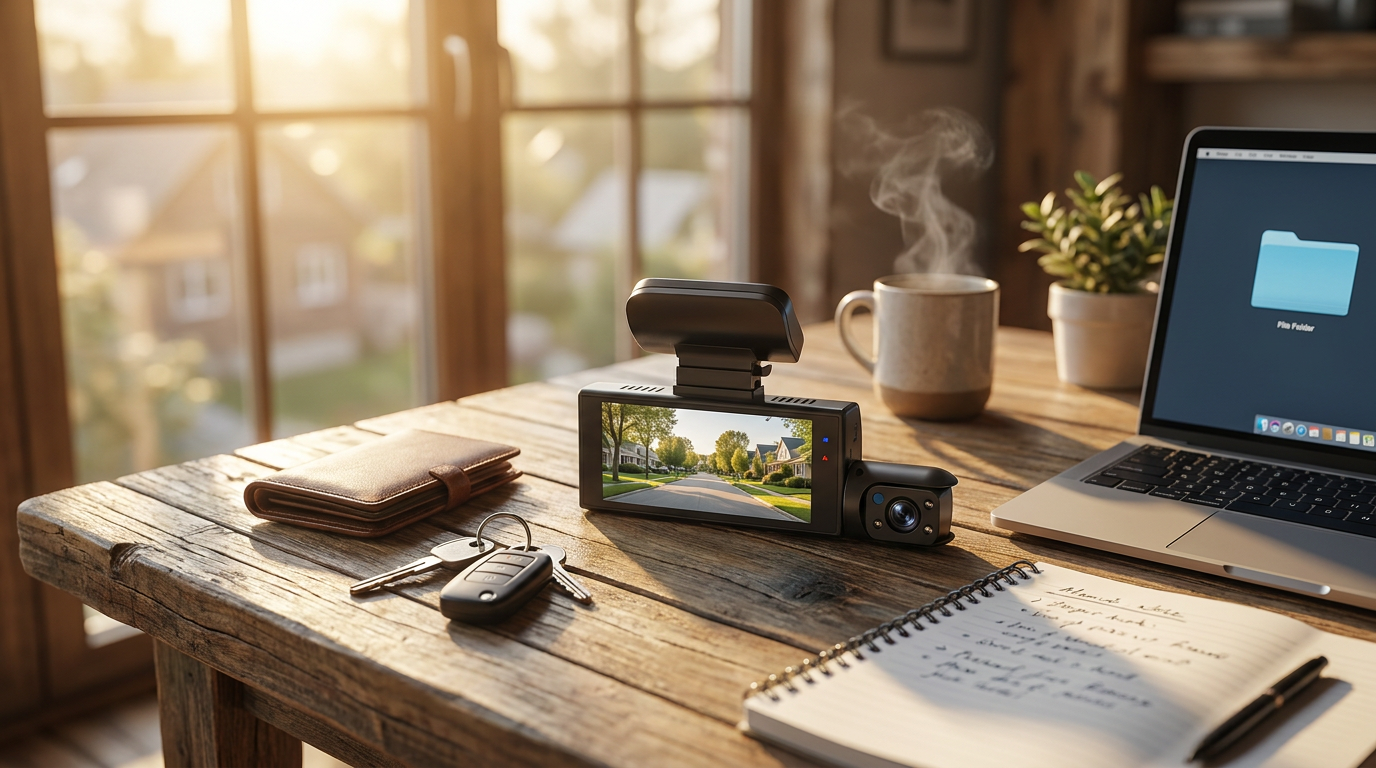
Why Sending Dash Cam Footage to Your Insurer Is a Mistake
 Maya ChenContributing Editor
Everyone says to send dash cam footage to your insurer, but this is often a critical mistake that can turn your own evidence against you. The conventional wisdom is that using a dual dash cam for insurance claim evidence provides irrefutable proof that expedites claims. While a high-quality camera system is an essential tool for any driver, blindly forwarding the raw footage can create more problems than it solves.
Your Footage Can Be Used to Assign Partial Fault
Here's the part nobody talks about: your dash cam records everything, including your own minor driving errors. Were you driving 3 mph over the speed limit a quarter-mile before the collision? Did you fail to come to a complete stop at a sign blocks away? An insurance adjuster, whose primary role is to minimize the company's payout, can use these non-contributory infractions to argue for comparative negligence. As legal experts point out, even if you are clearly not at fault for the crash, an insurer can leverage unrelated behavior to assign partial liability and reduce your settlement.
Why Full Memory Cards Create Legal Exposure
Photo by Ceren Büşra SEVTEKİN on Pexels
Handing over an entire, unedited memory card is even more dangerous. In the event of a lawsuit, this gives the opposing party's legal team full access to hours or even days of your driving history through the discovery process. They can scrutinize every second of footage, looking for any pattern of behavior to portray you as a habitually careless driver. You are essentially handing them the tools to build a case against your character, distracting from the facts of the incident. This makes understanding the core dual camera dash cam technical standards crucial for capturing crisp, isolated event files.
The Correct Protocol for Submitting Evidence
The proper protocol is tactical, not secretive. First, inform your insurance adjuster that you have video evidence of the incident. Do not send it. Wait for them to formally request it. When they do, provide only the specific, edited clip showing the moments directly before, during, and after the impact. This clip should be clear and high-definition, which is why selecting a system with proven dual camera dash cam night vision performance standards is non-negotiable. This approach provides the necessary proof without opening you up to unrelated scrutiny.
I'll change my mind when insurance companies are legally barred from using non-contributory driver behavior captured on video to assign partial fault. Until then, review your footage first.
Can my own dash cam footage be used against me?
Yes. If your footage shows you committing any traffic violation, even one that did not contribute to the accident, an insurer or opposing legal counsel can use it to argue for partial fault. This is a common tactic to reduce the value of a claim by shifting a percentage of the blame onto you.
Should I tell my insurer I have a dash cam immediately?
Yes, you should inform your adjuster that you possess video evidence. However, do not volunteer the footage itself. State that you have it available upon request. This positions you as cooperative while maintaining control over when and how the evidence is presented. Having the right hardware, whether you're weighing the values of a mirror cam versus a traditional dash cam, ensures the evidence you capture is clear and effective when you do decide to share it.