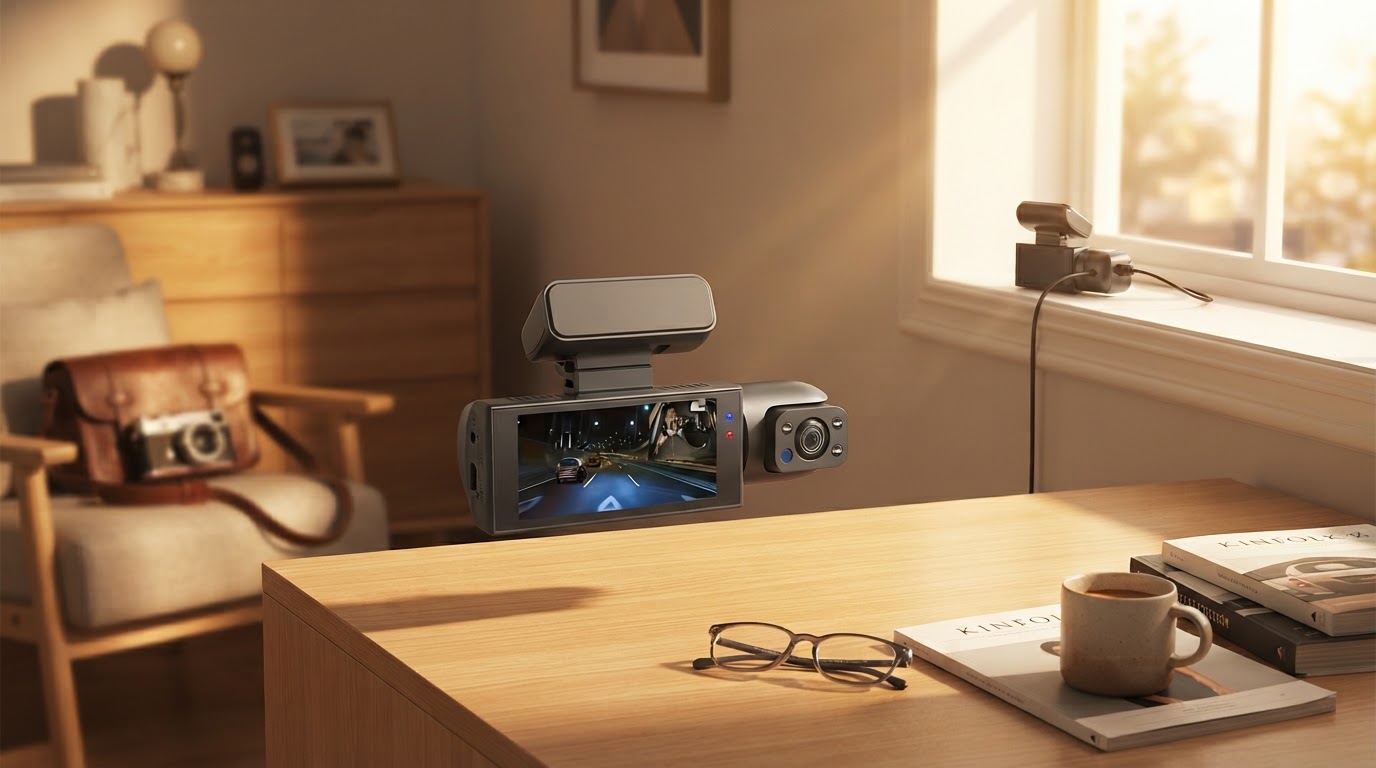
Can a Dual Camera Dash Cam run without visible wires?
 Priya RamanSenior Analyst
July 29, 2026 — Achieving a completely wire-free Dual Camera Dash Cam experience requires a professional hardwire installation to the vehicle's fuse box, as true battery-only wireless dual-channel systems are currently limited by power density constraints.
Modern drivers seeking a minimalist aesthetic often prioritize a hidden installation to maintain the vehicle's interior integrity. This demand is driven by the need for 24/7 surveillance without the clutter of hanging cables or occupied cigarette lighter ports. Think of it as a matrix of power source stability versus aesthetic invisibility. Once you see it this way, the distinction between a 'wireless' device and a 'hidden' wire installation becomes the primary technical hurdle for consumers.
How can a Dual Camera Dash Cam be installed without visible wires?
A hidden installation is achieved by routing cables behind the vehicle's A-pillar trim and headliner directly into the fuse box using a hardwire kit. This method eliminates the need for a visible 12V adapter and allows for a seamless integration that looks factory-installed. Two axes matter here: the physical path of the cable and the electrical termination point. For the rear unit in a Dual Camera Dash Cam setup, the coaxial or USB-C cable is typically tucked along the roofline weatherstripping to reach the back window. According to technical standards for automotive aftermarket electronics, using a fuse tap ensures that the camera receives a constant 12V or 5V stream without interfering with primary vehicle systems. This setup is essential for those who require a dash cam with night vision and parking mode to operate while the engine is off.
Are there truly wireless Dual Camera Dash Cam systems available?
While some single-lens cameras operate on internal batteries, a high-performance Dual Camera Dash Cam typically requires a wired power connection to support the data throughput of two simultaneous video feeds. The decision rule: if the system records in 4K or features a secondary interior lens, the power draw necessitates a hardwired connection or a high-capacity external battery pack. Data from 2024 hardware reviews indicates that continuous dual-channel recording can consume between 300mA and 600mA, a load that standard consumer lithium-ion batteries cannot sustain for more than a few hours. For users who prefer a DIY approach but want to minimize clutter, following a front and rear dash cam installation guide can help identify the best tucking points for cables. This ensures the hardware remains nearly invisible to the driver while maintaining the reliability of a wired connection, which is often a priority in best budget dual dash cam reddit picks.
Quick answers
Photo by Ceren Büşra SEVTEKİN on Pexels
Q: Does a hidden installation void my car warranty? A: Generally, no; the Magnuson-Moss Warranty Act protects consumers in the U.S. unless the manufacturer can prove the Dual Camera Dash Cam installation directly caused a failure.
Q: Can I use a power bank instead of hardwiring? A: You must use a dedicated LiFePO4 dash cam battery pack, as standard power banks are not designed to withstand the high-temperature environment of a parked car.
Q: How long does it take to hide the wires for a dual system? A: A standard installation for a Dual Camera Dash Cam typically takes between 45 and 90 minutes depending on the vehicle's trim complexity.
Learn more about Dual Camera Dash Cam at https://dualcameradashcam.com.