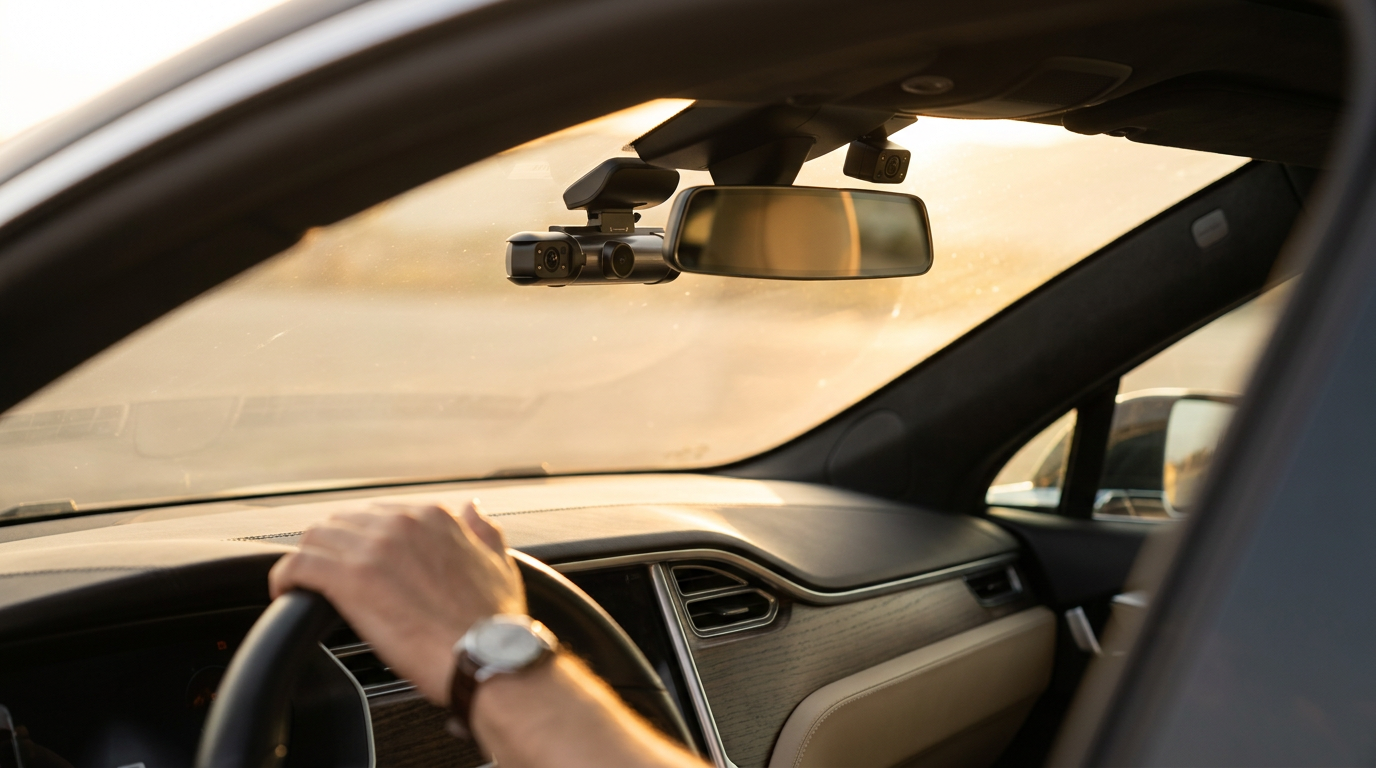
Simplifying Wireless Dual Dash Cam for Cars
 Priya RamanSenior Analyst
May 27, 2026. This analysis evaluates the transition from wired to wireless dual dash cam systems for modern vehicle security. It is intended for consumers seeking to balance high-resolution evidence capture with the simplified aesthetics of cable-free installation.
Evaluating these systems requires a structured approach to hardware selection. Two axes matter here: the bandwidth of the data transmission and the reliability of the power source. Think of it as a matrix of installation ease versus data integrity. When drivers seek a wireless dual dash cam for cars, they are often navigating the trade-off between a completely battery-operated unit—which may suffer from limited uptime—and a wireless data unit that still requires a discreet power lead. Once you see it this way, the selection process shifts from comparing arbitrary features to identifying which technical architecture fits your specific driving habits, whether you are a daily commuter or a professional rideshare operator.
The Connectivity Challenge in Modern Vehicles
The primary hurdle for any dual camera system is the physical distance between the front windshield and the rear glass. Traditional systems require routing a long coaxial or USB cable through the vehicle's headliner or floor trim, a process that can take hours and potentially interfere with side-curtain airbags. According to Garmin, the demand for wireless backup cameras and compact dash cameras has grown as consumers prioritize voice control and high-definition feeds without the complexity of invasive hardwiring. However, "wireless" in the dash cam industry often refers to two distinct functions: the connection between the front and rear units, and the connection between the camera and a smartphone.
True wireless freedom, as categorized by Redtiger, involves cellular connectivity for live GPS alerts and cloud storage. This level of connectivity allows the camera to act as a remote sentinel, providing a live look-in capability that traditional SD-card-only units cannot match. For many drivers, the "wireless" requirement is driven by the desire to avoid the "rats nest" of cables on the dashboard. Yet, the physics of 4K video transmission remains a bottleneck. High-resolution files, such as those produced by a 4K dual dash cam with night vision, require significant bandwidth. When this data is transmitted wirelessly from a rear unit to a front hub, any electromagnetic interference within the vehicle cabin can result in dropped frames or lower bitrates. Professional drivers often find that while wireless rear cameras simplify the initial setup, the stability of a dedicated signal remains the gold standard for insurance-grade evidence.
Performance Standards for Dual Camera Dash Cam Systems
Photo by lee starry on Pexels
When deploying a Dual Camera Dash Cam, the hardware must meet specific thresholds to be effective in legal or insurance disputes. Research into consumer search patterns reveals that a 4k dual dash cam with night vision is the most sought-after configuration, as it provides the clarity needed to read license plates at a distance. For those in the gig economy, a dash cam with interior camera functionality is equally vital. This configuration creates a comprehensive digital perimeter, capturing the road ahead while simultaneously documenting the cabin environment—a critical requirement for rideshare safety and liability protection.
Modern dual systems must handle simultaneous data streams. For instance, the SPRLEAF Dash Cam Front and Rear utilizes a 4K+4K dual setup to ensure that neither the front nor the rear perspective is compromised by lower resolution sensors. High-resolution sensors generate significant heat; therefore, the most reliable wireless dual dash cam for cars will feature robust thermal management to prevent the unit from throttling during long drives in summer conditions. Furthermore, the integration of loop recording ensures that the device never stops capturing data, even when the wireless cloud sync is temporarily unavailable due to poor signal. By prioritizing a dual camera dash cam that uses high-bitrate sensors, drivers ensure that the "wireless" convenience does not come at the cost of grainy, unusable footage during a nighttime incident.
Selecting the Right Architecture for Your Vehicle
Choosing between various wireless configurations requires a clear decision rule: if your priority is 24/7 remote monitoring and anti-theft alerts, prioritize an LTE-enabled wireless dash cam; if your priority is purely accident documentation with the easiest possible setup, a Wi-Fi-enabled dual system with a high-capacity internal buffer is superior. Nextbase offers a modular approach where specific rear-view modules connect directly to the main dash cam unit, providing full protection against tailgaters and rear-end impacts without requiring a separate power line for the second camera. This hybrid approach often provides the most stable performance for the average user.
To determine the best fit for your vehicle, use the following decision framework:
- Verify the wireless frequency: Systems using 5GHz Wi-Fi offer faster data transfer for 4K video playback compared to older 2.4GHz bands.
- Assess the power source: Determine if the "wireless" unit requires a 12V socket or if it can be hardwired into the fuse box for a parking mode feature.
- Check sensor synchronization: Ensure the front and rear cameras are timestamped together to provide a synchronized timeline of any event.
- Evaluate the app interface: Since wireless cameras rely on smartphone apps for footage retrieval, the software must be intuitive and compatible with your current OS.
- Confirm storage capacity: High-resolution dual streams require high-endurance U3-rated microSD cards to prevent write errors.
Shop Dual Camera Dash Cam here
Sources
Photo by Mateusz Dach on Pexels
- Wireless Dash Cam - Redtiger
- SPRLEAF Dash Cam Front and Rear, 4K+4K Dual Dash Camera for ...
- Dash Cams | Front & Rear Dash Cameras - Nextbase