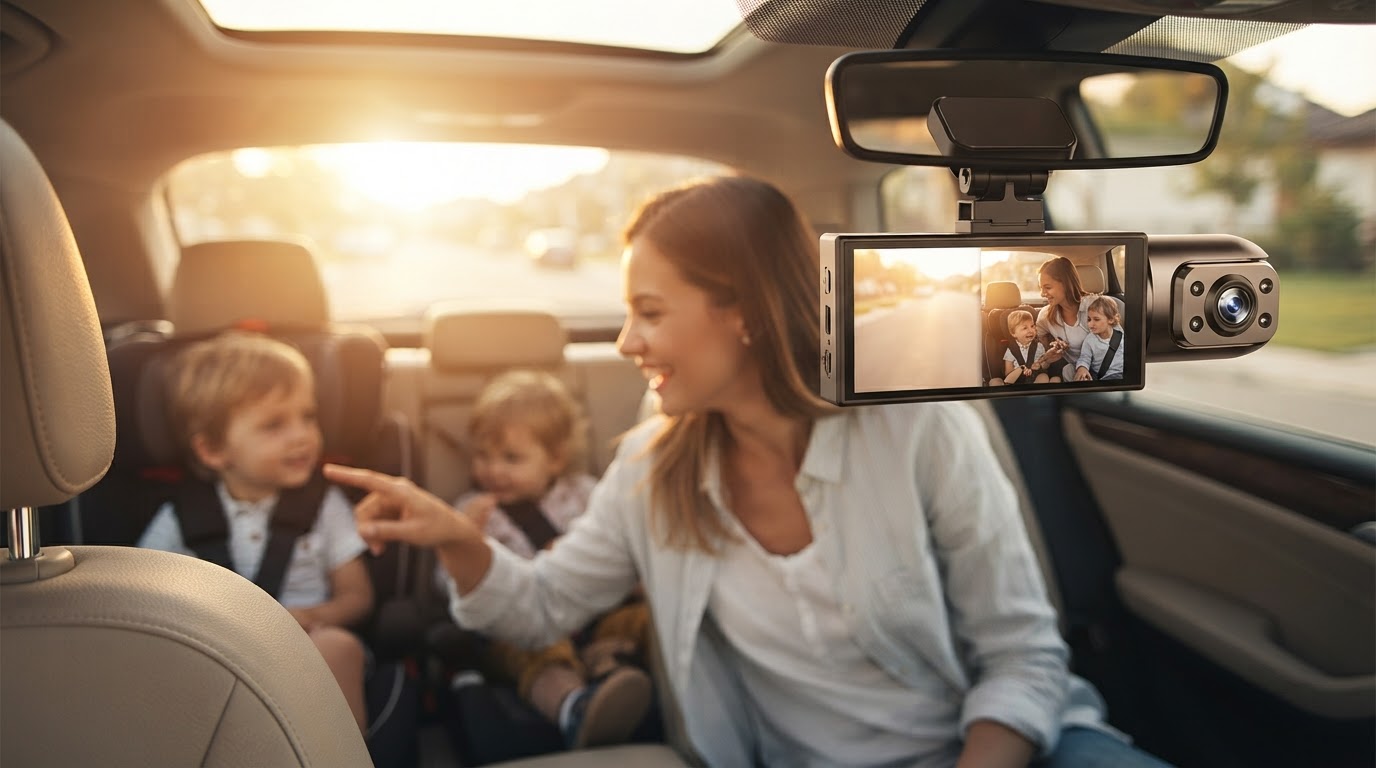
Why choose a Dual Camera Dash Cam with an interior camera?
 Jordan HaleStaff Writer
October 5, 2026 — A Dual Camera Dash Cam with an interior camera provides a critical layer of protection by documenting passenger interactions and cabin activity, provided the lens offers sufficient low-light infrared capabilities.
The first thing I noticed was the soft, rhythmic clicking of the Viofo A229 Plus mounting into place, a sound that signaled a new level of awareness inside my vehicle. I was sitting in my driveway at dusk, watching the small LEDs on the cabin lens glow a faint, ghostly red—the infrared sensors coming to life. For anyone driving for a living or simply worried about what happens when the doors are locked, that tiny lens pointed inward changes the entire atmosphere of the cabin.
Is an interior camera necessary for rideshare drivers?
An interior camera is essential for rideshare drivers because it creates an objective record of passenger behavior and driver conduct during every fare. Somewhere around week two of testing the Viofo A229 Plus, I realized that the presence of the cabin lens acted as a silent mediator, often encouraging better behavior from passengers who noticed the recording light. According to Vortex Radar, the A229 Plus supports an optional 1080p interior cabin camera that provides 3-way coverage, ensuring that the driver is protected from false claims regarding distracted driving or physical altercations. This setup is particularly effective when paired with a dual camera dash cam for rideshare drivers strategy, as it bridges the gap between what happens on the road and what happens inside the seats. The infrared sensors are the real heroes here, turning a pitch-black cabin into a clear, monochrome video feed that captures every movement without needing harsh interior lights.
How does an interior lens improve parking security?
Interior cameras improve parking security by capturing side-window break-ins and providing a 360-degree context that front-facing cameras miss. I keep coming back to the way the Nextbase Cabin View Camera integrates directly into the main unit, using a 140-degree wide-angle lens to see not just the seats, but the glass on either side of the car. It turns out that many vehicle thefts involve side-window entry, a blind spot for traditional dual dash cam with night vision setups that only look through the windshield and rear glass. Nextbase notes that their cabin module can record in up to 1080p HD, which is high enough resolution to identify a face peering through the driver’s side window. When combined with a dash cam front and cabin for rideshare configuration, this internal view ensures that if someone enters the vehicle, their actions are documented from the moment they breach the perimeter, providing law enforcement with much better evidence than a simple exterior view.
Quick answers
Q: Can an interior camera see in total darkness? A: Yes, most high-quality interior modules like the Viofo A329S utilize infrared (IR) LEDs to illuminate the cabin in the dark, producing clear black-and-white footage even when there is zero ambient light.
Q: Does adding an interior camera reduce the video quality of the front camera? A: It can; for instance, the Vueroid S1 4K Infinite maintains high resolution but may drop the frame rate of the interior and rear cameras to 15 fps if the front camera is pushed to 60 fps.
Q: How wide is the typical interior dash cam lens? A: Most interior modules, such as the Nextbase Cabin View Camera, feature a 140-degree wide-angle lens designed to capture the driver, the passenger, and the side windows simultaneously.
Learn more about Dual Camera Dash Cam at https://dualcameradashcam.com.
Sources
- Best Dash Cams for 2026, Tested and Reviewed - Car and Driver
- Front & Rear & Cabin Dashcam - viofo
- Cabin View Camera | Inside Car Camera - Nextbase