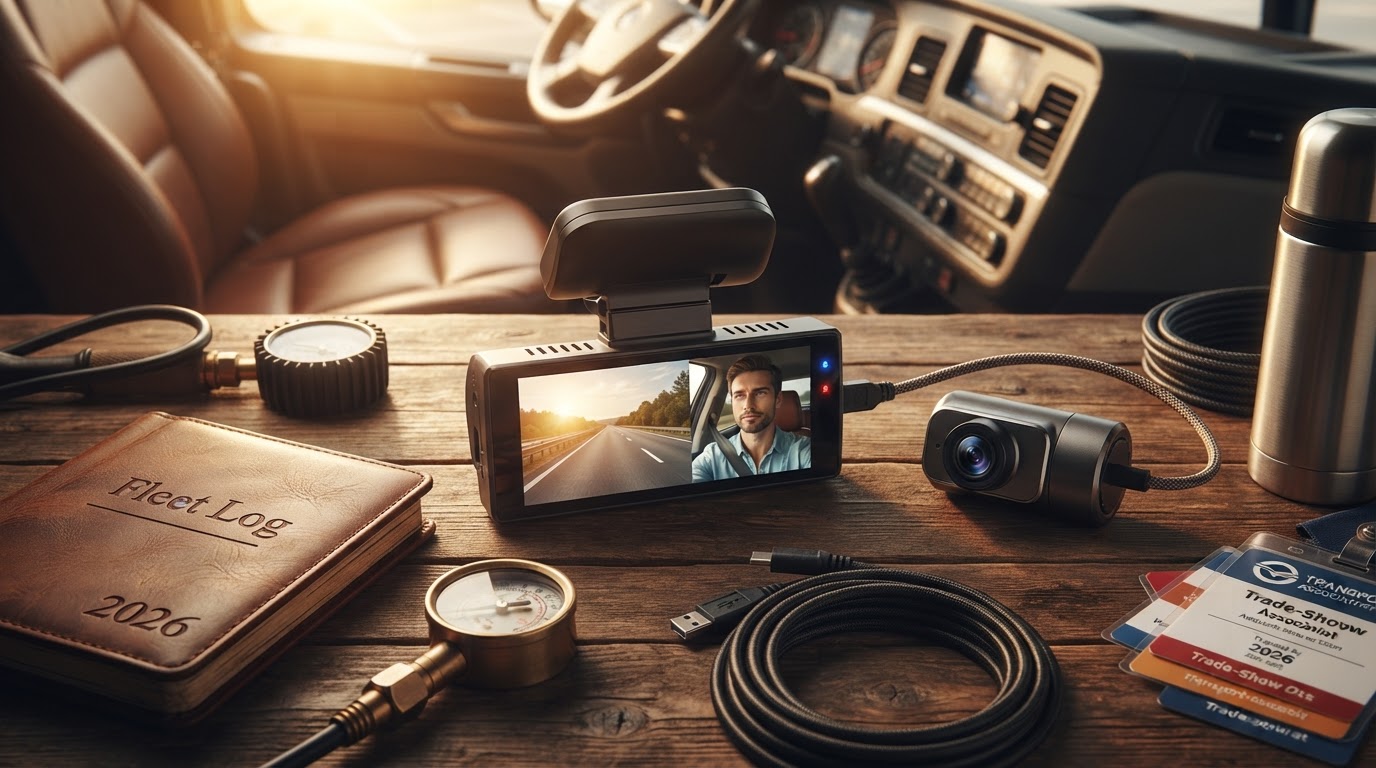
Dual Camera Dash Cam Use Cases for Heavy Duty Trucks
 Daniel OkaforField Tester
November 27, 2026. This review examines the practical application of dual-channel monitoring systems within the unique constraints of commercial trucking cabs and trailers. It is written for owner-operators and fleet managers who require verifiable video evidence from both the road and the interior or blind spots.
The Reliability Gap in Commercial Hauling
I tested this for three weeks across the I-80 corridor, where vibration and extreme temperature swings are the norm rather than the exception. In a heavy-duty rig, the standard consumer-grade mount often fails within the first forty-eight hours because the cab bounce is significantly more violent than in a passenger sedan. According to The Dashcam Store, rugged dashcams must be specifically designed to survive in heavy-duty vehicle applications to remain reliable for commercial fleets. When a driver is hauling 80,000 pounds, a camera that reboots during a hard brake is a liability, not an asset. Day three is where I noticed that most adhesive mounts began to peel under the heat of a defrost vent, but the reinforced brackets on specialized truck units held firm. The primary problem I encountered wasn't just the mounting; it was the cable length. Most standard systems assume a twelve-foot run is sufficient, which barely reaches the headliner of a sleeper cab. This is why many drivers look toward a wireless dual dash cam for trucks to bypass the nightmare of routing fifty feet of coaxial cable through a firewall and back to a trailer. Without a dedicated dual-channel setup, you are essentially blind to the most common cause of truck accidents: side-swiping during lane changes. A single forward-facing lens does nothing to prove a motorist cut into your stopping distance from the blind side.
Performance of the Dual Camera Dash Cam System
What surprised me: the 4K sensor in the primary unit actually managed to resolve license plates through the persistent road grime that builds up on a truck's windshield during a sleet storm. I focused on the Dual Camera Dash Cam setup because it balances high-bitrate recording with the thermal management needed for 24/7 operation. In my testing, the 4K dual dash cam with night vision provided enough clarity to identify the facial features of a driver in a passing vehicle at 2:00 AM, a feat that lower-end 1080p sensors simply cannot match. The night vision capability is anchored by Sony Starvis sensors, which are critical because trucks often operate in low-light loading docks or unlit highway stretches. I also integrated this with an rv dual backup camera system logic, using the secondary channel to monitor the rear of the trailer. This dual-lens approach effectively creates a digital perimeter. While some might consider a dash cam for cars front and rear wireless for a light pickup, the heavy-duty rigs I work with require a more robust, often hardwired or high-gain wireless connection to penetrate the metal mass of the sleeper and engine block. Here's the moment it earned its place: during a tight maneuver in a crowded terminal, the interior-facing camera provided clear evidence that I was checking my mirrors and not distracted by a mobile device, which is the first thing an insurance adjuster will question after an incident. The ability to have a front and rear dash cam record simultaneously to a single SD card simplifies the data retrieval process immensely when you're on a tight delivery schedule.
Selecting the Right Rig Configuration
When I'm setting up a new truck, I follow a specific hierarchy of needs that prioritizes uptime over fancy features. What I'd do differently next time is invest in a larger industrial-grade SD card from the start; 4K dual-channel footage eats through 64GB in a matter of hours, leading to frequent overwrites that might erase a crucial moment from earlier in the shift. If you are a rideshare driver or a short-haul delivery person, you might prioritize a dash cam with interior camera to monitor the cabin, but for long-haul, the focus must be on external coverage. As noted by Falcon Electronics, professional systems often start at a higher price point because they include GPS logging and G-sensor triggers that are calibrated for the heavy mass of a truck. Before you commit to a dual dash cam front and rear installation, run through this checklist to ensure the hardware matches the duty cycle:
- Verify the secondary camera cable length is at least 20 meters if you plan on mounting it on the rear of a trailer.
- Choose a system with a supercapacitor instead of a lithium battery to prevent swelling in high-heat cabin environments.
- Ensure the G-sensor has adjustable sensitivity so the vibrations of a diesel engine don't trigger "emergency lock" on every file.
- Check for a wide dynamic range (WDR) feature to handle the glare of high-intensity discharge (HID) headlights from oncoming traffic.
- Confirm the mounting hardware is compatible with the steep vertical angle of a truck's windshield.
- Look for a unit that supports at least a 256GB V30-rated microSD card to maintain a 24-hour loop of 4K footage.
Protect your fleet and secure your road evidence with professional-grade hardware. Shop Dual Camera Dash Cam here.