Dual Camera Dash Cam Night Vision Performance Framework
 Priya RamanSenior Analyst
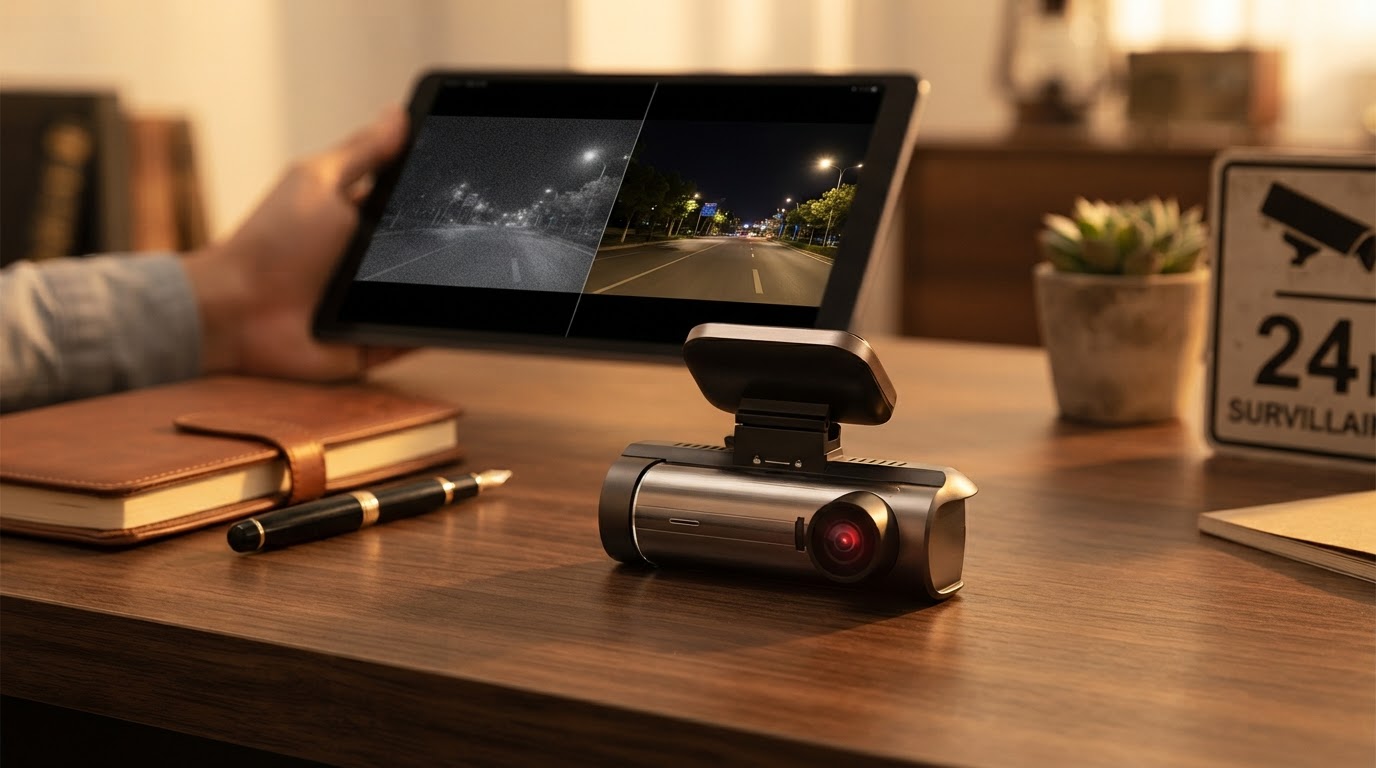
November 23, 2026 — The evolution of low-light imaging has fundamentally changed the baseline expectations for a modern Dual Camera Dash Cam. As consumer demand shifts toward 24-hour surveillance, the integration of specialized sensors and infrared arrays has become the primary differentiator in hardware efficacy.
Selecting a system for low-light environments requires an understanding of how hardware compensates for the lack of photons. According to The Dash Cam Store, high-performance night-vision dash cams utilize built-in infrared LEDs to record clearly inside the vehicle cabin regardless of ambient light levels. This technological shift is crucial for rideshare operators and night commuters who require evidentiary clarity when external street lighting is unavailable. In the current market, the distinction between standard digital gain and true infrared illumination defines the boundary between usable footage and digital noise.
The Three-Axis Vision Matrix
To evaluate a Dual Camera Dash Cam for night use, think of it as a matrix of three critical technical dimensions: sensor architecture, dynamic range processing, and illumination type. Two axes matter here: the ability to resolve detail in high-contrast environments (such as oncoming headlights) and the ability to see in total darkness (such as a vehicle interior at 3:00 AM). The VIOFO A229 Pro 2CH exemplifies this balance by utilizing dual Sony STARVIS 2 sensors, which provide 4K resolution on the front channel and 2K on the rear, supported by High Dynamic Range (HDR) to prevent "blowout" from reflective license plates. Meanwhile, systems like the AKEEYO NV-X2 prioritize a 2K super night vision front camera to maintain frame stability in low-light transit. For budget-conscious users, the Azdome 4K dual dash cam offers a $140 entry point with a 4.2-star rating across 241 verified reviews, proving that night-time clarity is increasingly accessible. Data from recent hardware benchmarks indicates that STARVIS 2 sensors offer a significant improvement in signal-to-noise ratios compared to first-generation sensors, particularly when paired with a large f/1.8 aperture lens that allows maximum light intake. The decision rule: if your primary concern is interior security, infrared LEDs are non-negotiable; if your concern is exterior hit-and-runs, prioritize a Sony STARVIS 2 sensor for the rear camera to capture plates through the glare of trailing headlights.
Expert tip: When installing a 4k dual dash cam setup, ensure the rear lens is not obstructed by heavy window tint, as even the best dash cam with night vision and parking mode will suffer a 20-30% reduction in effective range when filming through aftermarket films.
Once you see it this way, the choice becomes a matter of matching your specific driving environment to the sensor's light sensitivity. Users should also consider how a dual dash cam with parking mode manages power draw during overnight monitoring to ensure the 4k dual dash cam does not deplete the vehicle battery while seeking motion-activated events in the dark.
Sources
- Nightvision Dashcams, Record Inside Your Vehicle In the Dark
- AKEEYO NV-X2 Next-Gen Night Vision System | Dual 2K Super ...
- VIOFO A229 Pro 2CH 4K+2K Dual Dash Cam | Wirecutter's #1 Pick