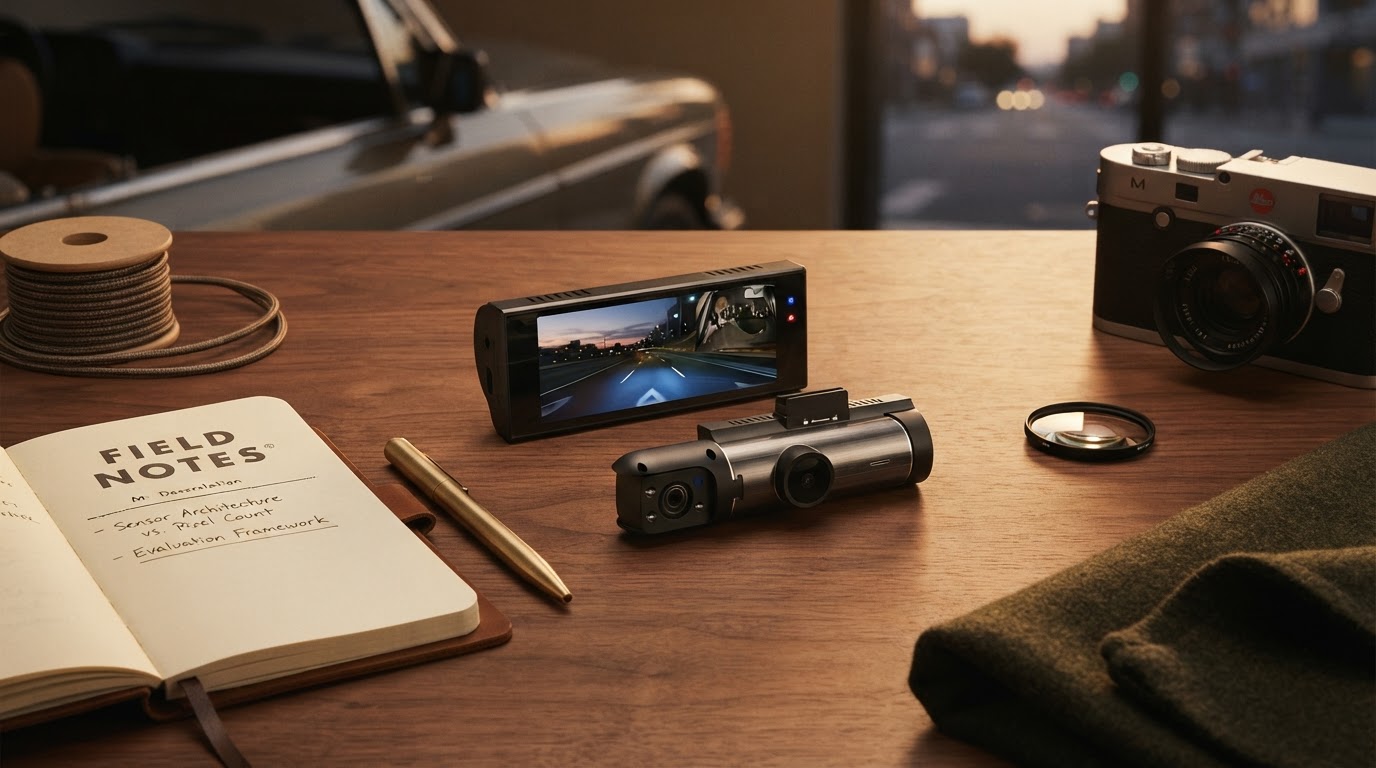
The 4K Dual Camera Dash Cam Framework
 Maya ChenContributing Editor
November 12, 2026 — The automotive security market is currently flooded with high-resolution claims, yet the actual utility of a Dual Camera Dash Cam often hinges more on sensor architecture than raw pixel counts. While the industry pushes for 4K marketing labels, the real value lies in how these dual-channel systems manage data throughput and low-light visibility simultaneously across two distinct lenses.
The conventional wisdom says that higher resolution is always better for identifying license plates, but this ignores the processing bottlenecks inherent in many budget systems. According to data from Redtiger, premium dual dash cam systems now prioritize a 4K+1080p split to balance storage efficiency with visual clarity, ensuring that rear-facing evidence isn't sacrificed for front-facing vanity metrics. This technical trade-off is essential for drivers who need consistent performance during high-speed travel or in variable lighting conditions where software interpolation often fails.
The Dual Channel Data Threshold
Run the math: A true 4K front sensor paired with a 1080p rear or interior sensor generates approximately 25 to 30 gigabytes of data per hour of driving. If a Dual Camera Dash Cam lacks a high-bitrate processor, the resulting compression artifacts will render a 4K image less useful than a well-tuned 2K feed. Buyers should look for systems utilizing the Sony STARVIS sensor series, which maintains a high dynamic range even when the interior cabin is dark. For those wondering can a dual camera dash cam record inside and outside, the answer is found in the infrared (IR) LED count. A standard interior lens requires at least four IR lamps to produce usable footage in total darkness. Furthermore, parking mode efficiency is often overlooked; a system consuming more than 5W in standby will likely trigger a battery discharge protector before it captures any meaningful incident. The current standard for high-end kits, such as those featured by BlackboxMyCar, involves dedicated hardwire kits that monitor voltage thresholds in real-time. Whether you are searching for a dash cam with interior camera for personal safety or assessing dual camera dash cam essentials for Uber drivers, the hardware must support sustained 30fps recording on both channels without thermal throttling.
Expert tip: Always verify the SD card's endurance rating rather than just its capacity. A Dual Camera Dash Cam writing two simultaneous high-definition streams will wear out a standard UHS-I card in months; only U3-rated high-endurance cards can handle the constant overwrite cycles required by dual-channel 4K setups.
Selecting the right uber driver dash cam dual lens configuration requires moving past marketing fluff and into sensor specs. I’ll change my mind when manufacturers start prioritizing frame rates over pixel density, but until then, the 4K+1080p configuration remains the only logical choice for serious road documentation.