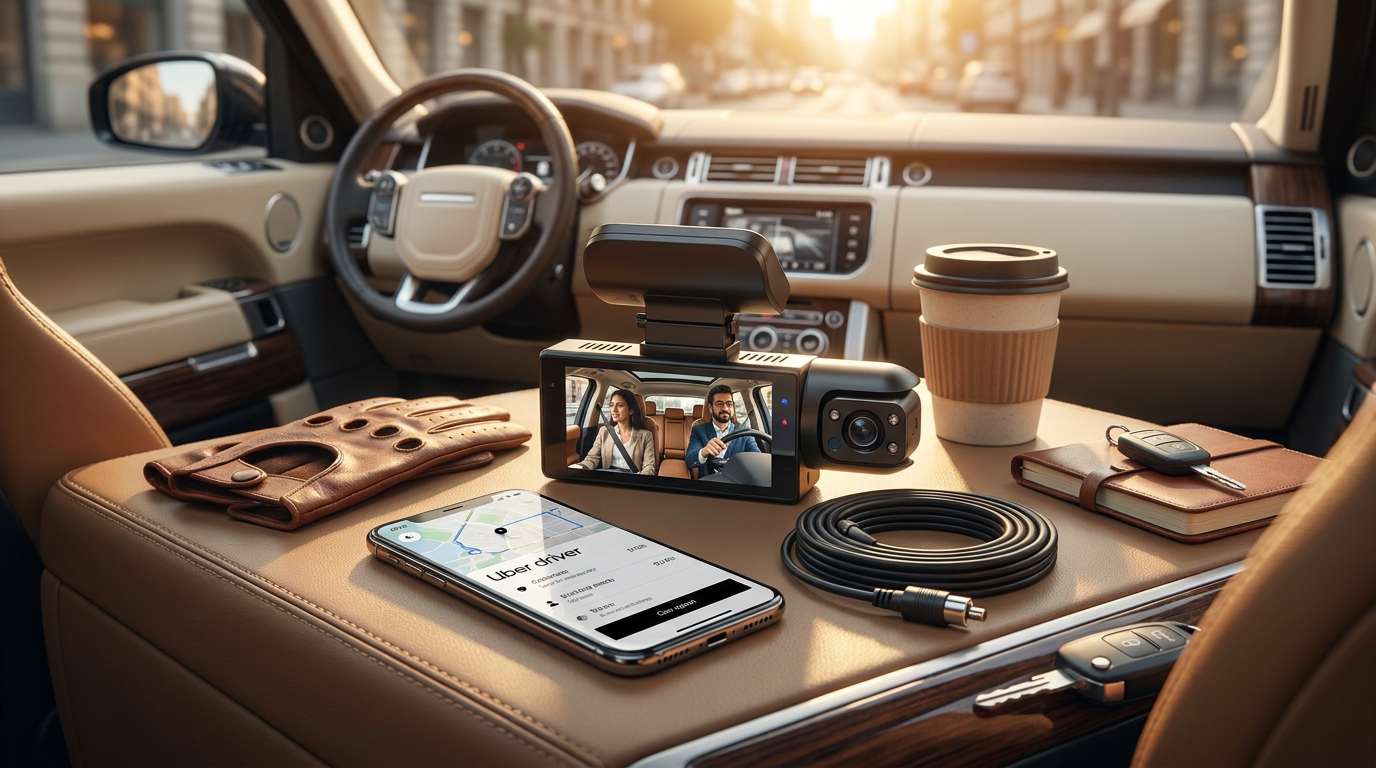
Rideshare Dash Cams: The Financial Case for a 4K Front Camera
 Maya ChenContributing Editor
The conventional wisdom for any Uber and Lyft interior dash cam combo is to prioritize the cabin-facing lens. Every guide obsesses over the interior camera for passenger disputes, but it's the front-facing 4K footage that actually protects you from financial ruin. While a difficult passenger can threaten your rating, a traffic collision can end your business. The focus on interior recording is a dangerous miscalculation of risk.
The Financial Reality of a Single Collision
Here's the part nobody talks about: the financial stakes of a traffic incident dwarf any passenger-related issue. A false cleaning fee might cost $150. A fraudulent complaint could lead to a temporary deactivation. An at-fault collision, however, carries devastating financial consequences. According to the Insurance Research Council, the average auto liability claim for bodily injury was $24,211 in 2022. Without irrefutable video evidence proving you were not at fault, you face soaring insurance premiums, policy cancellation, or a lawsuit that could cost you everything. A blurry, low-resolution front video is functionally the same as no video at all.
Why Front-Facing 4K Resolution is Non-Negotiable
Crystal-clear front-facing footage is your only reliable defense against liability in a collision or an insurance fraud attempt. The primary job of a dash cam is to capture license plates of other vehicles—day or night, moving or parked. A 4K sensor provides the necessary detail to legibly record a plate from a distance, which is often the deciding factor in a hit-and-run case. It also provides undeniable proof against common scams where another driver brakes suddenly or claims a phantom injury.
Many budget combo cameras compromise front-camera quality to add an interior lens. This is a critical error. Prioritizing a high-quality sensor and lens for the road ahead is the most important investment. A system with excellent 4K dual dash cam with night vision ensures that even in the most challenging lighting, your evidence is clear and actionable.
The Interior Camera: A Secondary Tool for Platform Risk
The interior camera is not useless; it simply serves a different, less critical purpose. It is a tool for managing platform risk—the risk of being deactivated by Uber or Lyft due to a false passenger report. It can help resolve disputes over messes, verbal altercations, or mask compliance. However, these issues rarely escalate to the level of financial catastrophe seen with traffic accidents. When selecting from various dual camera dash cam configurations, the interior camera should be considered a valuable secondary feature, not the main event. Never sacrifice front-facing 4K clarity for it.
Drivers comparing options, such as a Vantrue system to our own utility models, should weigh front-camera video specifications above all else. I'll change my mind when the average cost of a false cleaning fee report exceeds the average bodily injury claim from a fraudulent accident.
Is a dash cam with an interior camera still necessary for Uber?
Photo by Иван Васючков on Pexels
Yes, it is still a highly recommended tool for managing platform-specific risks like false passenger complaints, which could lead to deactivation. However, its role is secondary to the front-facing camera, which protects against the far greater financial risks of accident liability and insurance fraud. The interior camera protects your rating; the front camera protects your assets.
Does a 1080p front camera suffice if the interior camera is good?
No. While 1080p may seem adequate, it often fails to capture critical details like license plates from a distance, in motion, or in low-light conditions. This single piece of evidence can be the difference between proving your innocence and being found at fault in a hit-and-run or disputed collision. Sacrificing 4K resolution on the front camera is a poor trade-off.