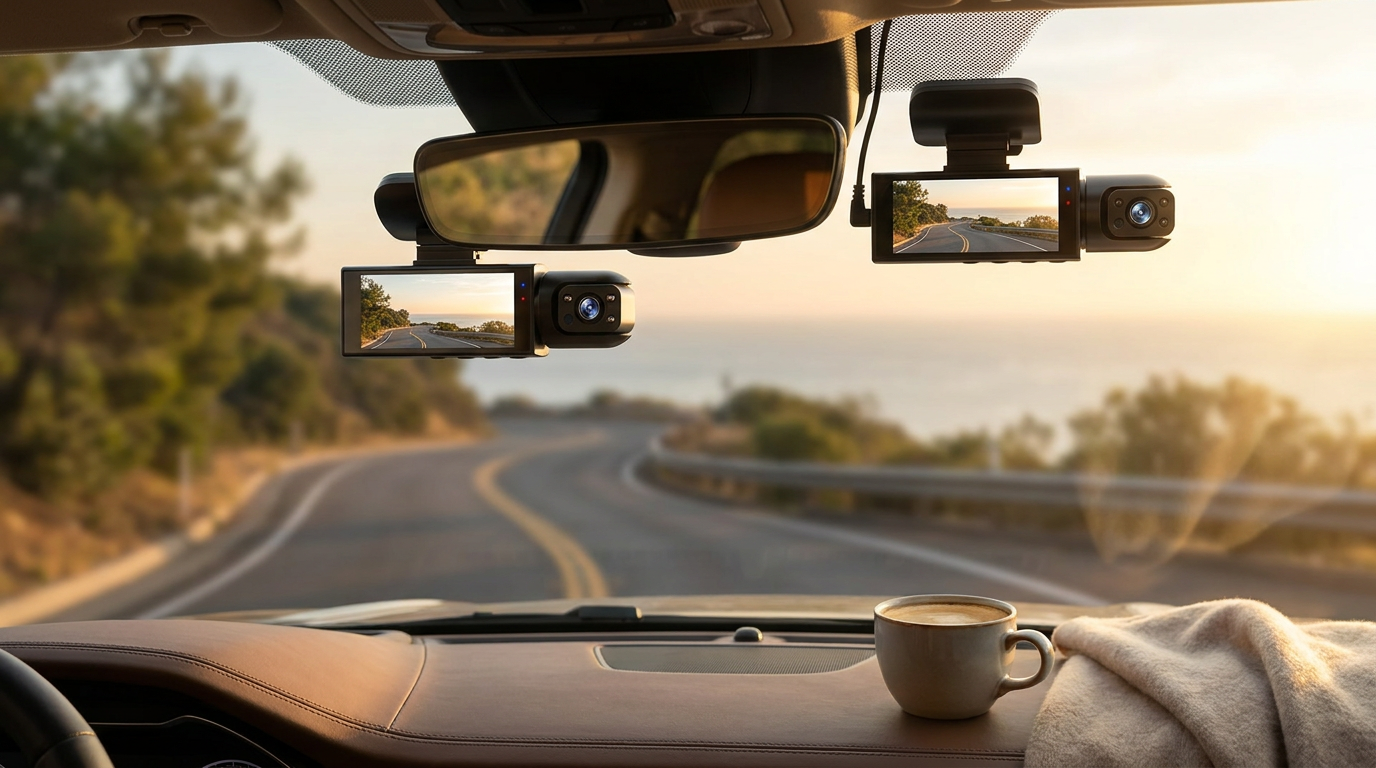
Rove R2-4K Dual vs. Essential Dual Camera Dash Cam Value
 Maya ChenContributing Editor
June 23, 2026 — The market is currently fixated on the Rove R2-4K Dual Dash Cam, which features a Sony STARVIS 2 sensor and 4K recording capabilities for $109.98. While the hardware specifications are technically impressive, the practical utility of high-resolution files for daily commuters remains unproven. The conventional wisdom says that more pixels equal more protection, but the data suggests a diminishing return for the average driver.
According to Slickdeals.net, the Rove R2-4K Dual records in 4K at 30fps for the front camera and 1080p for the rear, utilizing an F1.5 aperture. Here's the part nobody talks about: 4K video files consume storage at an exponential rate, often leading to shorter loop cycles or the requirement of expensive high-endurance SD cards. By contrast, the Dual Camera Dash Cam prioritizes a 1080P front and 480P interior setup. This configuration ensures that the 32GB SD card included with the unit provides significantly more historical footage before overwriting than a 4K system would on the same media.
Photo by Mike Bird on Pexels
Run the math: a 4K stream can easily exceed 300MB per minute of footage. For a ride-share driver or a daily commuter, the interior monitoring provided by the Dual Camera Dash Cam is often more legally relevant than the ability to count the rivets on a bumper three lanes over. Slickdeals.net notes the Rove unit offers a 150° front and 140° rear wide-angle coverage, which is standard for the price point, but it lacks the immediate cabin security focus that many urban drivers require.
Expert tip: When selecting a device, prioritize the loop recording efficiency over raw resolution. A dash cam that overwrites a critical incident because the 4K files filled the card in two hours is a liability, not an asset. Ensure your night vision capabilities are optimized for the specific lighting conditions of your garage or street parking rather than chasing sensor brand names.
I’ll change my mind when 4K compression algorithms and high-capacity storage costs drop to a level where they don't compromise the primary goal of a dash cam: continuous, reliable uptime.